
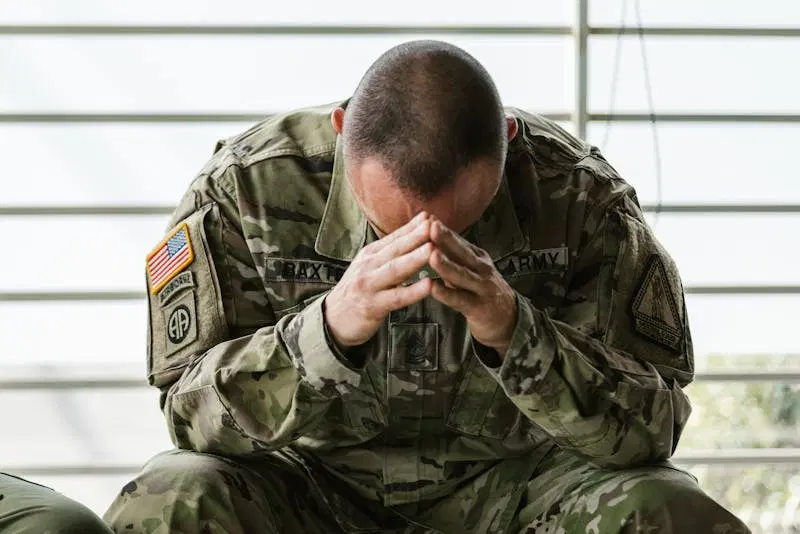
John was involved in a motor vehicle accident during military training that left him with nightmares and flashbacks.
Jane was sexually assaulted in her barracks. She has grown detached and withdrawn. She relives the event over and over in her head and can’t sleep at night.
Neither of these veterans was involved in combat. Can they still get a VA rating for their PTSD?
In this article, we’ll discuss combat-related PTSD vs. non-combat-related PTSD. We’ll also share key steps for filing for a VA rating even if your PTSD was not combat-related.
What is PTSD?
PTSD (post-traumatic stress disorder) is a mental health condition that can develop after experiencing or seeing a traumatic event.
Symptoms may include:
- Re-experiencing the trauma: This can include flashbacks, nightmares, or intrusive thoughts about the traumatic event.
- Avoidance: You may avoid reminders of the trauma, whether that’s people, places, activities, or even thoughts associated with the event.
- Negative mood changes: PTSD can leave you emotionally numb or disconnected from others. It can drive intense feelings of guilt and shame and make it difficult to enjoy the things that once brought you joy.
- Heightened arousal: This might include being easily startled, feeling irritable or angry, having trouble sleeping, or having difficulty concentrating.
The symptoms of PTSD can be very intense and impact daily life, relationships, and overall functioning. PTSD doesn’t look the same for everyone. Some people may experience it right after the trauma. Others may develop symptoms years later, sometimes after they are triggered by another stressful event.
What Is Combat-Related PTSD?
When people think of developing PTSD from military service, they often think of combat-related PTSD. In order to get a diagnosis of combat-related PTSD and be eligible for a VA disability rating, you must show that you were injured while:
- Engaged in armed conflict (in combat or during an occupation or raid), or
- Engaged in hazardous duty (like demolition, flying, or parachuting), or
- Participating in war simulation activities (like live fire weapons practice or hand-to-hand combat training), or
- Exposed to instruments of war (like a military vehicle, weapon, or chemical agent), or
- Engaged in an activity you received a Purple Heart for
Combat-related PTSD can be rated from 0% to 100%, depending on the severity of your symptoms. In most cases, a veteran can simply provide a statement about their combat-related PTSD and earn a service connection. That’s because there’s usually enough evidence surrounding the combat incident (service records, combat action reports, medals, citations, etc.) to qualify the veteran for a service connection.
Another reason the burden of proof is lower with combat injuries is that there is often national security-related confidentiality surrounding combat missions.
What Is Non-Combat-Related PTSD?
The burden of proof is higher for earning a service connection for non-combat PTSD. You must show that your PTSD was triggered by a stressor related to your military service. Common non-combat stressors include:
- Military training accidents
- Experiencing or witnessing a serious vehicle accident (automobile, ship, airplane, etc.)
- Military sexual assault
- Harassment from a superior or fellow troop
- Physical assault
- Survivor’s guilt
- Stress related to the ongoing risk of death and violence
Can I Get a VA Rating for Non-Combat PTSD?
Yes, it is possible to get rated for non-combat PTSD as long as you provide the right evidence. Your evidence should include:
- A current PTSD diagnosis from a medical provider
- A description of your stressor that correlates with your service records
- A written opinion from a psychiatrist or psychologist stating that the stressor caused your PTSD. (This opinion is also known as a medical nexus letter)
Your evidence may also include:
- A personal statement about your service-connected stressor and the onset and scope of your PTSD
- A buddy letter (from friends, family members, or co-workers who observed the symptoms of your PTSD in relation to your military stressor)
After submitting your claim, you’ll need to undergo a compensation and pension exam, also known as a C&P exam. The VA uses this exam to determine the level of your disability.
What if I Already Have a Mental Health Rating?
The military only awards one mental health VA rating, but you have options for filing for an increased rating if you are showing symptoms of PTSD.
Higher-Level Review
You can request a Higher-Level Review if you think that the VA did not evaluate your claim properly. This review allows a senior adjudicator to review your claim. It does not require new evidence and is designed to catch any mistakes in the previous review processes.
Supplemental Claim
You can also file a Suppemental Claim if you have new and relevant evidence of your PTSD. You will want to present updated medical evidence and statements from your doctor. Supplemental claims provide a way to augment your original mental health claim without having to start all over again with the VA claims process.
Appeal
You can also file an appeal, but be advised that the appeal process can take a very long time (often up to seven years).
If you are given a PTSD rating and it exceeds your current mental health rating, the VA will award compensation based on the higher rating.
Need help learning how to file your VA disability claim for non-combat-related PTSD? VA Claims Academy makes it easy with resources like a plug-and-play nexus letter and personal statement template. Contact us to learn more.